Wet Work(05)
Building the 35mm Visual Language
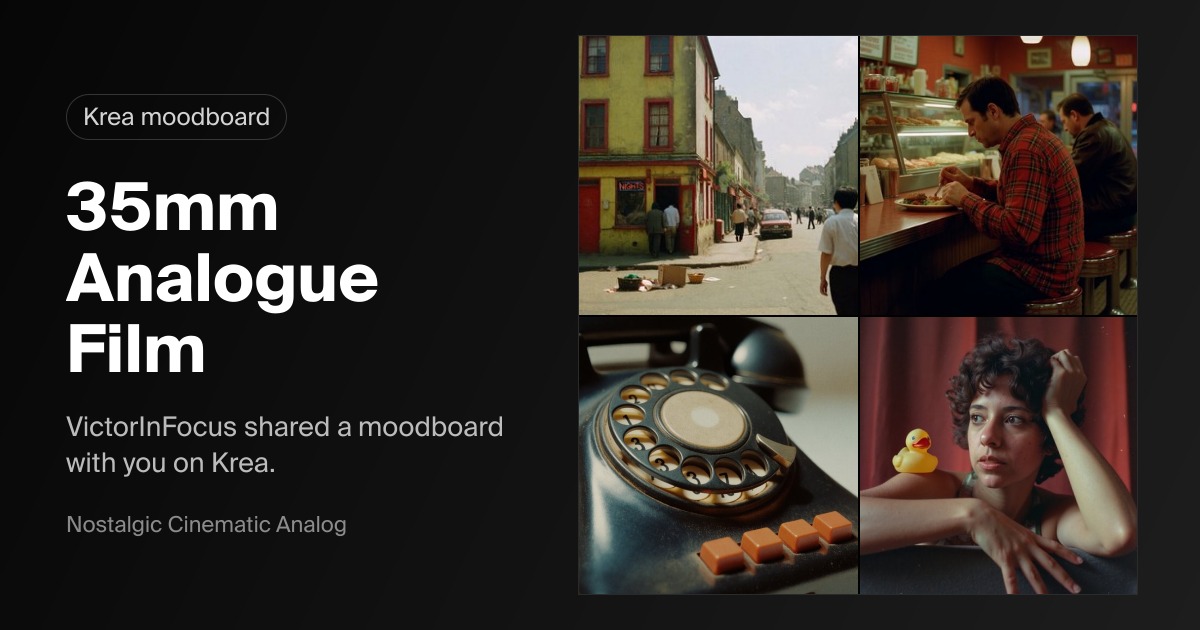
Before creating the replacement stills, I built a 35mm Analogue Film moodboard in Krea from gritty film-photography references. The images gave me a practical visual vocabulary: visible grain, warm daylight, hard shadows, bold colour contrast and candid observational framing. I used that moodboard while generating the stronger cinematic stills, so the new shots could share a texture rather than simply match a prompt.
Replacing the First-Pass Boards
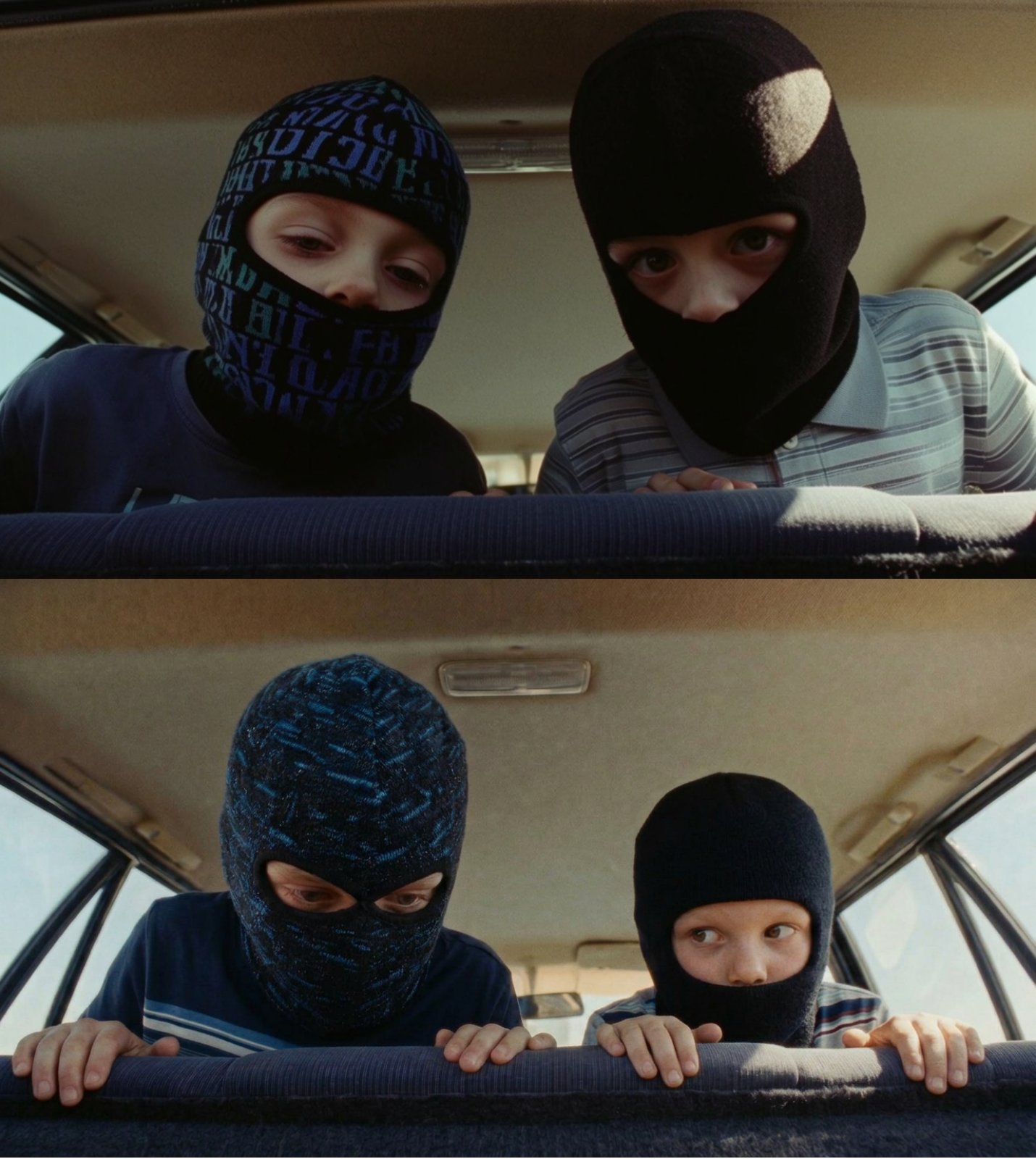
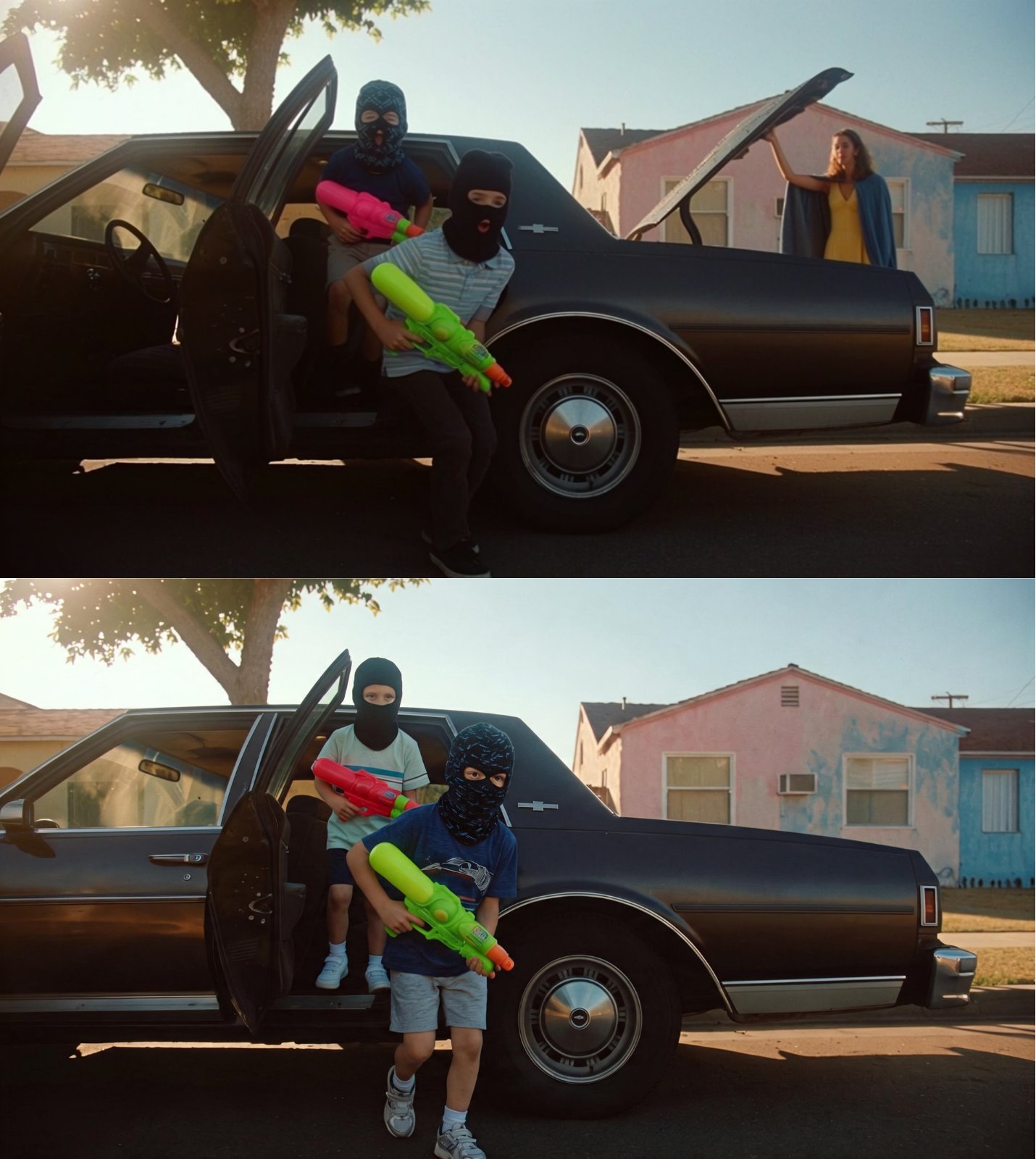
InVideo Agent One gave me a useful first-pass structure, including storyboards and a rough sequence, but its default aesthetic was not the finish I wanted. I kept the plan, created stronger Krea stills informed by the moodboard and replaced weaker scenes one by one. Character transfer helped preserve the original framing and tension while moving the two children into a more controlled visual world.
Keeping the Children Consistent
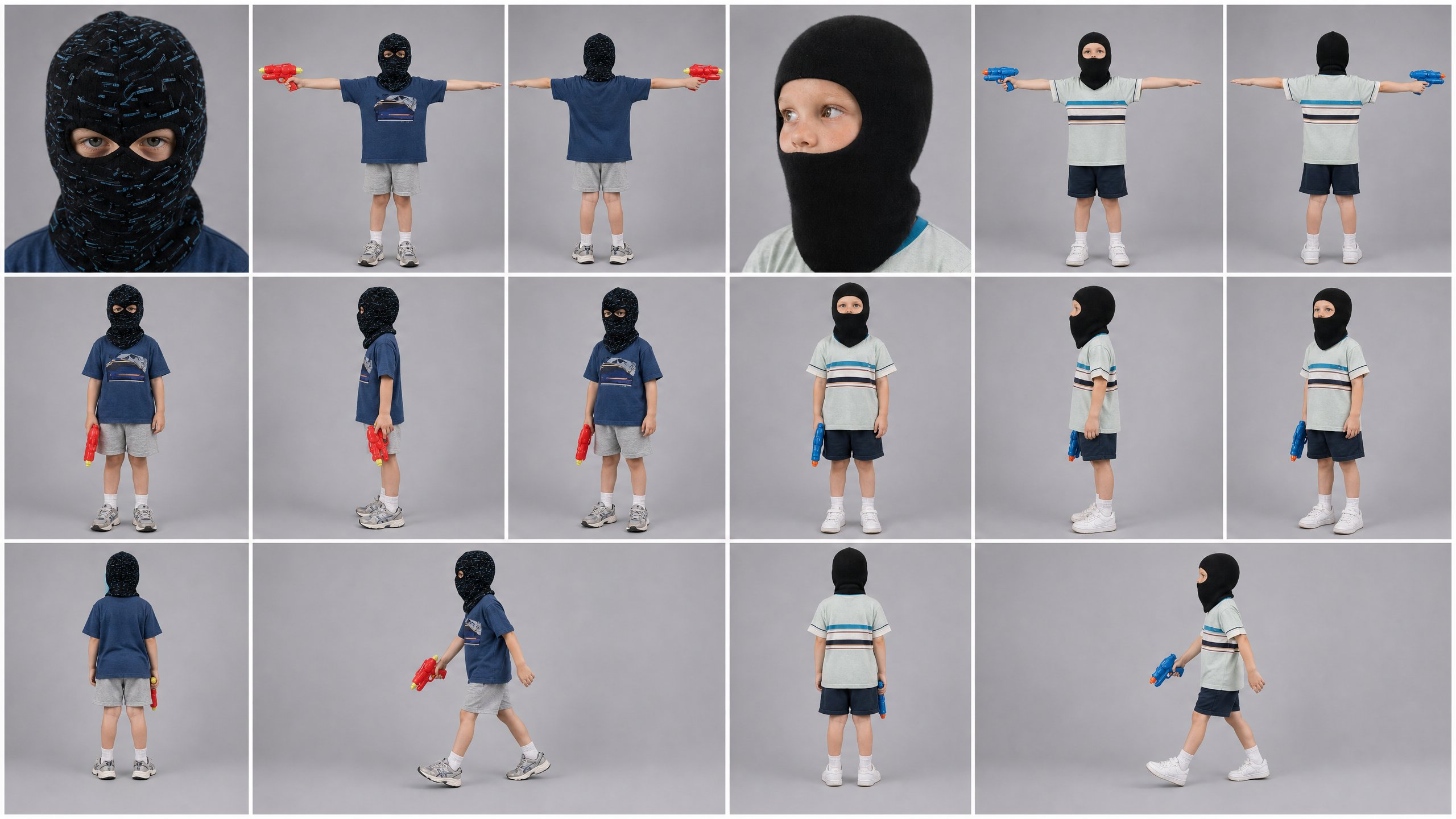
A shared character sheet fixed the children’s masks, clothing, proportions and water-gun colours before I moved them into the revised shots. It did not remove every variation, but it gave each transfer a clearer continuity target and made the sequence feel like the same two characters moving through one afternoon.
Finishing the Reveal
I completed selected motion shots with Seedance 2 and Kling 3, then cut the final film in DaVinci Resolve and used Suno for music and sound. The finished piece keeps the hard-boiled crime-film language intact until the action reveals itself as something much smaller and more playful: a neighbourhood water-gun ambush.
Workflow overviewWorkflow